I am nothing like an athletic person, but I have always appreciated the combination of strength and flexibility... well, the sort of body language it conveys. The same is true for dancing and martial arts, I am much better at watching it, seeing the details, than actually doing it... :) But if this is a language, then what you are going to see here is a whole conversation. Recorded straight from the streets, as a matter of fact... I mean you rarely see athletes climbing over whole buildings during contests, don't you? ...and who said ninjas don't exist anyway???
Saturday, 5 November 2011

Sunday, 9 October 2011
Rain As Music
It was raining the other day, and I was looking for something on youtube, a video or sound record of the sound of the falling rain. I actually had an idea to try it myself, but I have found some very nice ones. People seem to find the sound of rain or flowing water tranquilizing and meditative. This is an interesting contrast to the fact that rainy whether is often referred to as depressive. Should I mention here Tarr movies, which are sometimes noted for their "depiction of hopelessness"? I think actually one thing that helps one to immerse in these movies is the constant fall of rain, which somehow puts you at ease, regardless of what other topics may come up. But then again, think of Gene Kelly Singing In The Rain for another association with rain... Rain is a nice thing. I used to enjoy walking around when it rained. It is just something that makes you wonder...
Friday, 26 August 2011
One Last Dance - Cha Mo
A kind of sad story of an assassin. This is the intro, the music is by Pakk Hui, it can be found on youtube as "Broken Orange". I saw this on the way home from China on the airplane. It is kind of dangerous to allow emotions enter your decisions if you are an assassin. Consequences soon follow... and yet... what's there without them?! suits my present mood perfectly...
Sunday, 21 August 2011
Beauty In Art And Science
This is a little segment from a documentary about Nobel price winning physicist, Richard Feynman in which they discuss the notion of beauty in arts and sciences. To me, beauty seems to be the most important and most elusive universal concept. The greatest motivating force, the thing that captures our interests and as we chase it we discover newer and newer parts of the world around or inside us, which otherwise we would not have bothered to do. The thing that is beyond basic instincts to survive, and yet it can become more important than those. To admire it makes our lives worth living. And yet... there are many ways one appreciates beauty, some seem mutually exclusive, as one listens to this conversation. We could also say that while Feynman discusses the beauty in details, an analytic approach, his artist friend rather appreciates the whole. Anybody who ever did some science can appreciate what Feynman says about the beauty in details, and how those details fit together. And yet I also feel that science often fails to see that the imminent, spontaneous beauty of things do not survive if they are taken apart, as perhaps some artists cannot see beauty beyond their own scope of perception. So perhaps the questions raised could be put as follows, for the scientist "What does the knowledge of the details add to the whole if the whole is destroyed in the process?", and to the artisit "How can you say you know beauty, if you know nothing about the intricate details that make it possible?". I think the important thing to realize is we always have a choice what view we take for a specific occasion (or experiment with more than one even if they seem exclusive...). I mean it seems unlikely that even scientists would run havoc mutilating all flowers on a field of roses, or cutting up breasts for that matter, for the merits of details, for example... A scientific training is not a lifelong obligation to analyze, nor is an artist only capable of seeing only one dimension of beauty, despite the fact that people who exclusively insist on being one or the other (perhaps the majority, unfortunately) give you that feeling...
Sunday, 14 August 2011
Einstein's Brain
One of the drawbacks of being a well-publicised genius is that the guy who does your autopsy may think it better to remove your brain in the name of science, and that your eyeballs would be a suitable present for your eye doctor. So at least it happened with Einstein despite his wish to be cremated and scattered. A man called Thomas Harvey, who did the autopsy, thought it was without question that the brain should be used for research and managed later to persuade Einstein's relatives. He than later took the brain as his personal possession and gave a piece to the occasional visitor who happened to have a good enough reason. In the video above, Harvey slices off a piece of brain with an elegant movement using a butcher's knife on the kitchen table for a Japanese Einstein fan, who wishes to use it for educational purposes... The video is part of the documentary "Einstein's Brain"; you may watch the whole thing on youtube. There seems to be very little other findings of scientific value at the moment.
Wednesday, 22 June 2011
Giant Centipede
Another one of god's strange creations is the giant centipede. It can grow some 30 cms long, and may eat bats or mice if hungry... Its venom is also toxic to humans, probably not fatal, though. In any case, I would certainly not risk a bite if I could avoid it...
Monday, 6 June 2011
Blackadder Meets Cromwell
I like the idea behind Blackadder. The incarnation of a cynical hero in different historical periods who gets more cunning over the centuries while he also gets lower in his social position, which triggers him even more to refrain to his scheming skills. Lots of sarcastic humour... Blackadder: The Cavalier Years was produced after the third series in 1988. While I could have chosen a good number of other segments from the series that I like very much, I have decided to post this particular one for several reasons. First because it is half the length of a regular episode (maybe due to the fact that it is a special episode made as part of Comic Relief), and does not need particular knowledge of previous parts (though none of the other episodes really does). But perhaps more importantly, I have chosen it because it is also related to another thing that I find an intriguing topic independently of the series: Oliver Cromwell and the English Civil Wars. The Cavalier Years tells the story of how Blackadder managed through the most difficult event of the period, the execution of King Charles I. Interestingly, there are not that many feature films which focus on this conflict, the most notable exception is perhaps "Cromwell" (1970). This short of course finds a way to blend the events with satire while preserving some characteristics of the historical figures. Well, it certainly does not forget the mention the warts of Oliver Cromwell, for one thing...
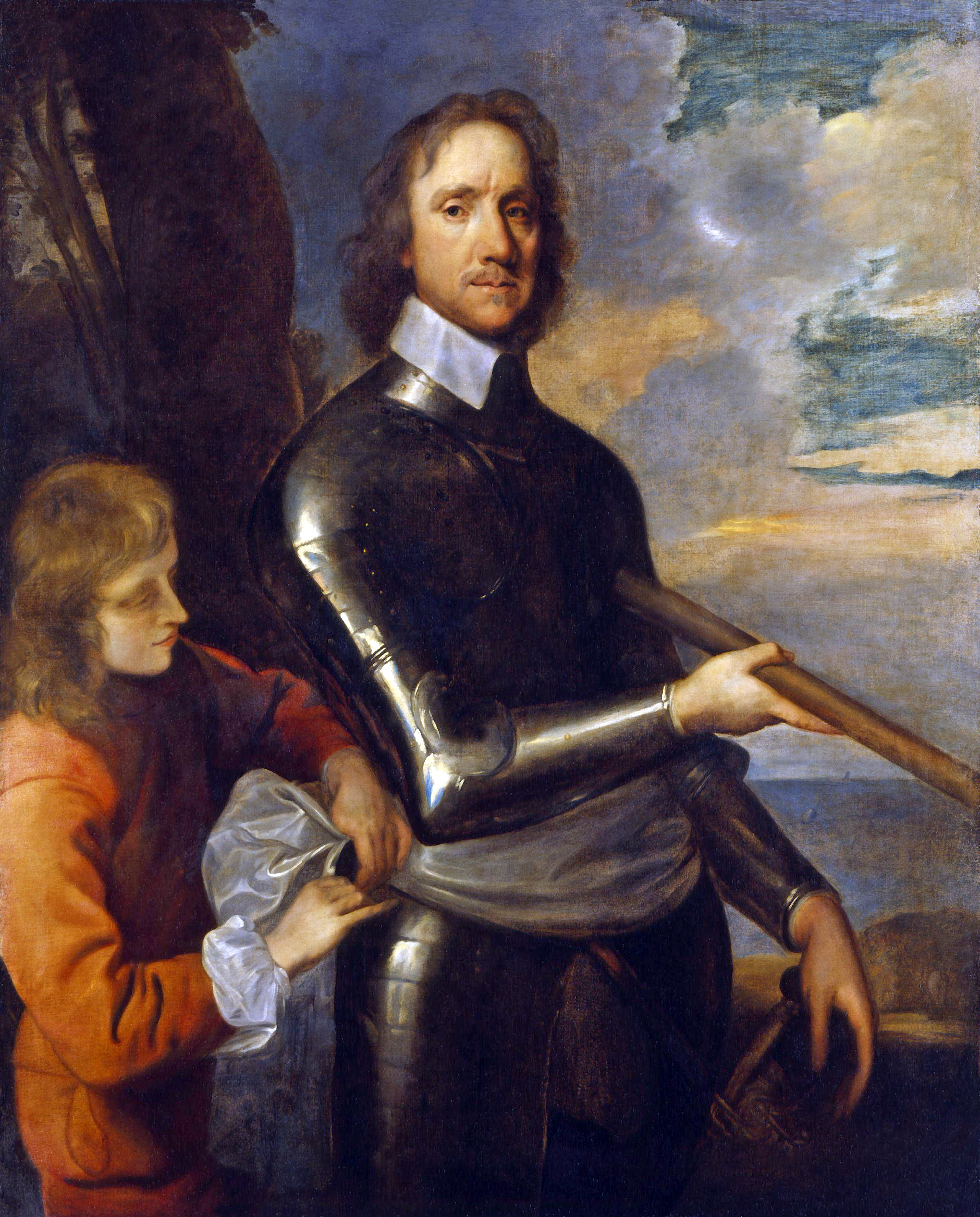
Well, Mr Cromwell, have you come far? From country squire to Lord Protector of England. And that says it all, although our King Charles in this short hasn't got the slightest idea what Oliver is talking about (how could he, since Cromwell got that title only long after the king was executed). I couldn't stop wondering why Cromwell has blond hair here... As seen from the painting from about that time, he was quite dark haired. But of course it is true, Cromwell did come a long way. In fact, as Lord Protector he had more power than kings before him. He was offered the crown but refused. Indeed, the very period was outstanding because nobody really expected that things would go that far. Nobody was ready to govern without a king. It can be argued what Cromwell's intentions were. It is sure that with the king absent, it was only his personal presence that kept things going, and after his death, monarchy was to return quickly. It is also sure that Cromwell did experiment with new forms of government, though eventually he remained in control until his death. This period was full of possibilities which came before their time, and hence they were unbearable sources of uncertainty and instability. As a brilliant tactician, he remained practically undefeated in his life, and it was only after his death that he was "posthumously executed". His head was displayed on a pole in Westminster Hall for several years, and it was only in 1960 that it was finally buried.
Subscribe to:
Posts (Atom)